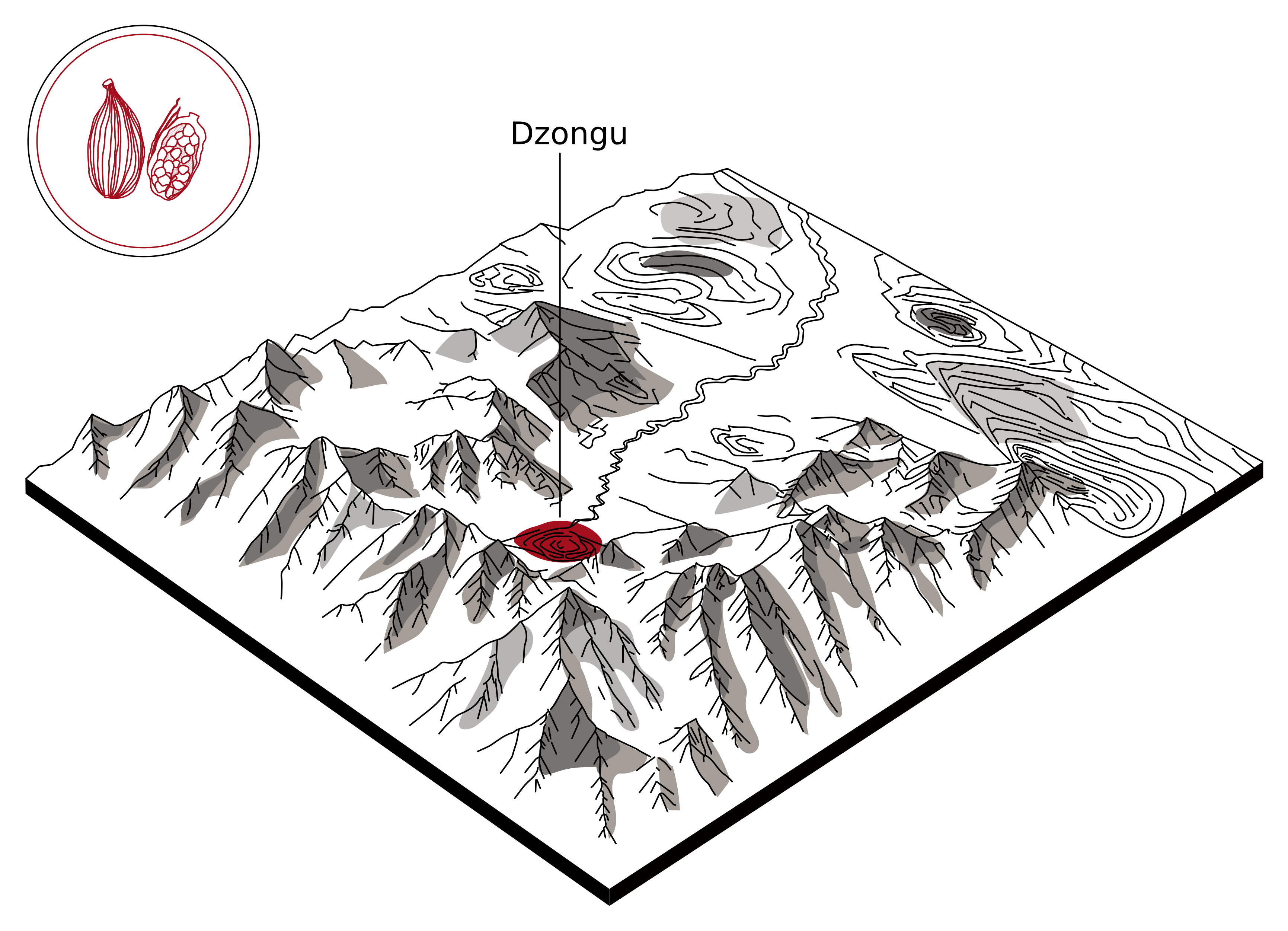
Dzongu, North Sikkim
Himalayan Forest Honey
Beside a UNESCO World Heritage Site
Lepcha country beside Khangchendzonga National Park, a UNESCO World Heritage Site.
First harvest late 2026. Oak, magnolia and rhododendron above; wild banana and tree-fern below.
Be the first to know
First commercial harvest expected late 2026. Leave your email and we'll write to you the day this honey ships.
No spam. One email when this harvest is ready.
- Village
- Dzongu, North Sikkim
- Altitude
- 700 – 6,000 m
- Harvest
- Late Spring
- Certified
- FSSAI registered · Eurofins tested
- In progress
- EU organic · GI tag
Dzongu, North Sikkim
Dzongu is a protected reserve in North Sikkim, set aside for the Lepcha — Sikkim's indigenous people, and one of the oldest continuously settled communities in the eastern Himalayas. Entry is restricted. The forest is intact in a way that almost nothing else in mainland India is. The reserve adjoins Khangchendzonga National Park, a UNESCO World Heritage Site since 2016 and the core of the Khangchendzonga Biosphere Reserve, which UNESCO added to its World Network of Biosphere Reserves in 2018. Dzongu rises from sub-tropical valley floor at 700 metres to alpine pasture above 6,000. In a single day's walk, you cross five distinct forest types. We have been working with Lepcha beekeepers in Dzongu since 2024, slowly and on their terms. The first commercial harvest is expected in the coming season. We are not in a hurry — Dzongu honey is the slowest, rarest jar we will ever produce, and we would rather it arrive late than arrive wrong.
What the bees forage on.
The Dzongu canopy is the richest forage we have ever sourced from. Oak, magnolia, and rhododendron at higher altitudes give way to wild banana, tree-fern, and broadleaf evergreens lower down. Lepcha ethnobotany names dozens of bee-forage plants that don't appear on any commercial list. When this honey arrives, it will be unlike anything else in our catalogue.
Every jar is traced to its village.
We're building FarmLedger so the code on the lid will open this harvest's own record: the beekeeper (when they agree to be named), the harvest date and the lab results.
How Traceability Will Work